
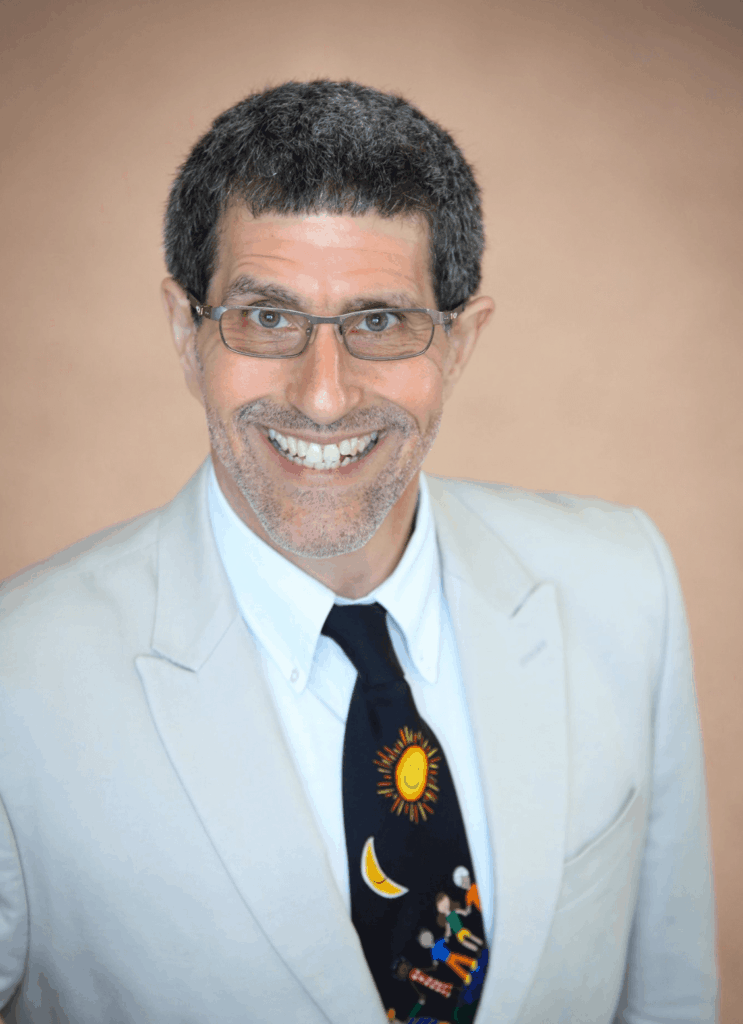
About Dr Scott Terry
Clinical Psychologist | Narara, Central Coast NSW | Telehealth Australia-wide
People rarely fit neatly into one psychological category.
A relationship difficulty may also involve ADHD. Burnout may involve anxiety, work structure, identity and a relationship that has been under strain for years. Someone who appears highly successful may have spent much of their life compensating for difficulties they never fully understood. A couple may keep trying communication techniques when the problem exists at a different level entirely.
That is why I try to begin with the larger picture.
I am Dr Scott Terry, a Clinical Psychologist whose professional background crosses individual psychology, couples and family systems, ADHD and psychological assessment, educational psychology, teaching, supervision, organisational leadership and business consultation.
Those areas matter to me not because they create a longer list of credentials.
They matter because real human problems often cross several of them at once.
I work with adults, couples, families, professionals and organisations from Narara on the Central Coast, NSW, and by telehealth throughout Australia.
What Am I Trying To Understand When We First Meet?
I am not only listening for a diagnosis.
I am trying to understand the system around the problem.
What is happening now?
What keeps repeating?
What has already been tried?
What appears to work for a while but never quite holds?
What is happening inside the person, between people and in the environments in which they live and work?
And perhaps most importantly:
What are you actually trying to create?
Sometimes change requires something relatively practical.
A different behaviour.
A better routine.
A boundary.
A conversation that has been avoided.
A new way of managing attention or executive functioning.
A change in how two people respond to one another.
A relatively small change can sometimes create a different experience. That experience can alter what someone believes is possible. Greater possibility can create greater agency, and greater agency can begin to change the way a person understands themselves.
At other times, the problem needs to be approached at a deeper level.
The aim is not to make every problem complicated.
It is to work at the level where change is actually needed.
I Am Interested In Change That Lasts Beyond The Consulting Room
One concern I have about psychological care is how easily it can become organised around short-term symptom management.
Brief treatment can be exactly right for some problems.
But not every difficulty is a short-term problem.
A person can learn a useful technique and still remain caught inside the same relationship pattern, the same environment, the same view of themselves or the same way of responding to the world.
I am interested in something larger than simply giving people another psychological tool.
I want clients to understand themselves and their patterns well enough that they become increasingly capable of creating change without needing a psychologist to do it for them.
The goal is not dependence on therapy.
The goal is greater capacity to direct your own life.
That means developing not only insight, but the ability to notice patterns, test assumptions, make different choices, observe what happens and change course when necessary.
Ultimately, I want the power to create change to return to the person whose life it is.
Change Does Not Always Happen At The Same Level
Sometimes the right intervention is small.
Change a behaviour.
Create a routine.
Have the conversation differently.
Put an external structure around ADHD instead of relying repeatedly on memory or willpower.
Stop reinforcing a relationship pattern that has occurred hundreds of times.
Small changes can matter enormously.
At other times, changing the behaviour without changing the system simply recreates the same problem somewhere else.
The deeper issue may involve the way someone understands themselves, the unwritten rules inside a relationship, the structure of a workplace, a longstanding developmental pattern or what someone believes is possible for their life.
I therefore do not want to decide in advance how large the change needs to be.
Sometimes we need movement.
Sometimes we need enough stillness to understand what is actually happening.
Sometimes we need to review what has already been tried rather than automatically doing more.
And sometimes the most important discovery is that the problem has been framed in the wrong way.
Seeing Possibilities That Are Difficult To See From Inside The Problem
People often come to psychology because they feel trapped.
They may understand intellectually that change is possible while being unable to see how it could be possible for them.
One thing I hope begins to happen relatively early in our work is that the problem starts to feel less closed.
Not because I can promise that everything will become easy.
But because there is often more room to move than someone can see while they are caught inside the pattern.
I want clients to begin asking:
Is there another way of understanding this?
Is there something important we have not yet seen?
Could I respond differently?
What would a better life actually look like from here?
Sometimes changing the way the problem is understood is the beginning of changing the problem itself.
Why “Restarting Relationships”?
My wife came up with the name Restarting Relationships.
Over time, I realised that the idea describes something much larger than couples therapy.
Restarting does not mean trying to return to the way things were.
Often the old normal is exactly what is no longer working.
Restarting asks a different question:
What Kind Of Relationship Could We Create From Here?
That may mean creating a different relationship with your partner after years of conflict, distance or betrayal.
It might mean developing a new relationship with ADHD—understanding how your mind works rather than spending another decade fighting against it.
It may mean changing your relationship with anxiety, depression or trauma so that an experience that has profoundly affected you no longer has to organise your life in the same way.
It might mean a different relationship with your children or family.
For a professional or business owner, it may mean changing the relationship with work, leadership, a business partner or an organisation you have created.
And sometimes the relationship most in need of restarting is the relationship you have with yourself.
Restarting does not mean going back to the way things were. It means creating a better way forward.
That is what the name means to me.
How I Work With People
I am probably not the right psychologist for someone looking for a person who will only sit quietly, nod and occasionally ask how something feels.
There are times when listening quietly is exactly what is needed.
There are also times when I will be direct.
I can support someone without agreeing with everything they are doing.
I can hold someone accountable without blaming or shaming them.
If I think an assumption, behaviour or relationship pattern is helping to maintain the problem, I am likely to say so.
I ask questions.
I often teach.
I challenge assumptions.
I use humour—sometimes admittedly bad humour—because serious psychological work does not have to be solemn all of the time.
I can be analytical when analysis helps and very pragmatic when what is needed is simply to do something differently.
I also often give people things to work on between appointments.
Therapy should not exist only during the hour we are together.
I want clients experimenting, observing, practising and learning in the rest of their lives.
At the same time, I do not see myself as the person who possesses the answer and gives it to the client.
I see myself as a facilitator of change.
My job is to help you develop more capacity to understand and influence your own life.
What Experience Has Taught Me
Over a long clinical career, I have become progressively less interested in being the person who simply knows the greatest number of techniques.
Knowledge matters.
Training matters.
Evidence matters.
Experience matters.
But none of those, by itself, makes someone a better psychologist.
What matters more is whether I can remain curious enough to notice what does not fit.
Can I recognise when the explanation I started with is wrong?
Can I look beyond the immediate symptom to the pattern or system that keeps producing it?
Can I use what I know without forcing the person into what I know?
Can I see possibilities that the client cannot yet see for themselves?
And can I remain open to the possibility that something unexpected may change our understanding of the problem?
Expertise should not eliminate curiosity.
If anything, experience has made curiosity more important.
Clinical Psychology
My individual clinical work includes anxiety, depression, trauma, stress, burnout, ADHD, relationship difficulties, major life transitions and more complex or overlapping psychological presentations.
I am particularly interested in situations where the obvious explanation does not completely account for what is happening.
Someone may have been treated repeatedly for anxiety while unrecognised ADHD continues to contribute to the problem.
Depression may be intertwined with burnout, grief, relationship strain or the way someone has structured their life.
Attention difficulties may reflect ADHD—or sleep, anxiety, trauma, depression, neurological factors or several interacting influences.
A diagnosis can be extremely useful.
But diagnosis should help us understand the person.
It should not replace understanding the person.
ADHD, Assessment, Giftedness And Learning Differences
ADHD and related areas have been a longstanding part of my clinical, educational and academic work.
My interest extends beyond simply asking whether someone does or does not meet diagnostic criteria.
People with the same diagnosis can function in very different ways.
Some struggle primarily with attention and organisation.
Some are more impulsive, restless or stimulation-seeking.
Some function exceptionally well when something is novel, urgent, complex or meaningful and struggle disproportionately with routine work.
Some become highly successful while relying heavily on urgency, overwork, intense interest or elaborate compensatory systems.
My doctoral research examined adults who were gifted and had learning disabilities. That work contributed to a continuing interest in what happens when substantial ability and substantial difficulty coexist within the same person.
Someone can be highly capable and genuinely impaired in another area.
Someone can think exceptionally well and still struggle to organise everyday life.
Someone can perform brilliantly when deeply engaged and have great difficulty initiating something routine.
Someone can succeed professionally for years without fully understanding how much effort has been required to compensate.
My ADHD and assessment work therefore looks not only at impairment.
I also want to understand what is working.
Which characteristics create difficulty?
Which may become useful in the right environment?
What does this person need to manage differently?
And how do attention, executive functioning, relationships, work, development and environment interact?
Couples, Relationships And Families
Relationship work is not simply an additional technique within my individual psychology practice.
It has been a substantial part of my professional formation.
My background includes postgraduate Marriage and Family Therapy training, advanced structural and systemic family-therapy work, extensive clinical work with couples and families, supervision of clinicians and university teaching in couples and family systems.
I draw from established approaches to relationship therapy—including Gottman-informed ideas where they are useful—but I do not organise every relationship around one method.
Relationships are systems.
What appears to be a communication problem may also involve trauma, ADHD, attachment, sexuality, betrayal, family history, emotional regulation, power, parenting, work stress or individual psychological difficulties.
Sometimes a communication strategy is exactly what is needed.
Sometimes communication is merely the place where a much larger problem becomes visible.
The model should follow the problem. The problem should not have to fit the model.
Why The Central Coast?
After several years living and practising in the Sunshine Coast hinterland in Queensland, my wife and I chose to make the Central Coast our home.
My wife had lived previously in NSW and wanted to return to this part of the state. For me, the Central Coast quickly began to feel like somewhere I wanted to put down roots.
I love living close to Strickland State Forest and being part of a local community while still being close enough to the train line that I can continue teaching in Sydney.
I also wanted my Australian practice to become rooted somewhere rather than existing only online.
I continue to work by telehealth with people throughout Australia, but Narara and the Central Coast are now home.
I want to contribute here—to individuals, couples and families, to professionals and businesses, and to the broader community in which I live.
Restarting Relationships is not simply a psychology practice that happens to be located on the Central Coast.
I want it to become part of the community.
What Does “Making A Difference” Mean To Me?
I use that phrase often.
I do not mean simply helping someone feel better for an hour.
Sometimes making a difference is very small.
Someone changes one behaviour.
Has one conversation differently.
Stops repeating something that has been hurting them.
Begins to see one possibility that was previously invisible.
Small changes can accumulate.
At other times, the change is much larger.
A relationship is rebuilt.
A person reorganises the way they work.
Someone develops a different understanding of themselves.
A family begins responding differently to one another.
A person who has spent years feeling trapped begins to experience genuine choice.
For me, psychological change eventually connects with a larger question:
What kind of life are you trying to create, and what do you want that life to contribute?
That contribution may be to a partner, a family, a workplace, a community or something much larger.
Purpose does not have to mean changing the world.
Sometimes it means living your own part of it more fully.
Why Am I Still Interested In This Work?
Because people still surprise me.
A person’s story is never only the story of what has happened to them.
It is also the story of what they may be able to do next.
I still find it deeply meaningful when someone who could not see a way forward begins to see one.
When a couple has a different conversation.
When someone finally understands why a pattern has followed them for years.
When a person begins to act with greater agency.
When something that seemed fixed becomes movable.
Those moments are why this work still matters to me.
Professional Background At A Glance
Dr Scott Terry is an Australian registered psychologist with an area-of-practice endorsement in Clinical Psychology.
His professional background includes:
- Clinical Psychology, psychological assessment, diagnosis and complex formulation
- postgraduate Marriage and Family Therapy training
- advanced structural and systemic family-therapy training
- couples, family and intensive relationship work
- ADHD, neurodivergence, giftedness and learning differences
- Educational Psychology and doctoral research into gifted adults with learning disabilities
- trauma, anxiety, depression and complex psychological presentations
- university teaching and clinician education
- clinical supervision and development of other practitioners
- organisational consultation, executive work and business-partner relationships
- leadership of multidisciplinary mental-health organisations
- critical-incident and postvention work
- applied scholarship concerning change across individuals, relationships and organisations
Qualifications and experience matter.
But I do not expect someone to choose me because the list is long.
The important question is whether that background helps me understand your problem more clearly, recognise when something important is being missed and work with you toward change that is useful in your actual life.
For GPs and other referring professionals
I welcome referrals from GPs, psychiatrists and allied health professionals for adult Clinical Psychology, ADHD and differential assessment, complex formulation, relationship difficulties and related psychological care.
My approach emphasises clear clinical reasoning, practical treatment planning, multidisciplinary communication where appropriate and consented, and referral onward when a question requires expertise or assessment outside my scope.
I am familiar with contemporary Australian Medicare and GP referral pathways, telehealth, documentation, risk management and multidisciplinary care.
Starting From Where You Are
You do not need to know what diagnosis you have.
You do not need to know which therapy model you need.
You do not even need to know exactly what needs to change.
You need somewhere useful to begin.
My job is to help us understand what is happening, what keeps it happening, what possibilities we may not yet be seeing and what kind of change might actually matter.
Executives, Founders And Organisations
My background also includes business consulting, organisational leadership and founding and directing multidisciplinary mental-health organisations.
That experience has repeatedly shown me that people cannot always be understood separately from the systems in which they work.
An executive may have a psychological problem that needs treatment.
They may also be functioning within a poorly designed role or organisation.
A founder may be exceptionally good at creating something and much less interested in maintaining it.
Two business partners may have differences that initially made them unusually effective together and later become a source of major conflict.
ADHD and executive-function differences can create difficulty in one part of professional life while contributing positively somewhere else.
My organisational work therefore looks at both the person and the system rather than automatically deciding that one of them is the problem.
Teaching And Supervising Other Clinicians
Teaching remains important to me because it forces clinical reasoning to become explicit.
It is relatively easy for an experienced practitioner to say:
“I know what I think.”
It is harder—and more useful—to answer:
Why?
What evidence supports it?
What else could explain this?
What am I overlooking?
What would make me change my mind?
I currently teach in Australia and have previously held university roles involving psychology, clinical training, couples and family systems, developmental and educational psychology, supervision and professional practice.
I have also spent many years supervising clinicians and supervisors.
That work continually reinforces a standard I believe clients also deserve:
Clinical judgement should be explainable, reviewable and capable of correction.
An Integrative Approach Does Not Mean “Anything Goes”
I have trained in and worked with a wide range of psychological, relational, developmental and systems approaches.
That does not mean every technique should simply be combined.
Different problems require different ways of understanding change.
Cognitive and behavioural approaches can be useful.
Family-systems thinking can be useful.
Trauma-informed work can be useful.
Relationship models can be useful.
Developmental psychology can be useful.
Sometimes the most important intervention is not another psychotherapy technique at all, but a change in environment, expectations, relationships or organisational structure.
The question is not:
How many techniques can we use?
It is:
What kind of change does this situation actually require?
My Ongoing Work On Understanding Change
A continuing part of my academic and professional work is the Integrative Framework for Change (IFC).
It grew from a question that has followed me across clinical work, couples therapy, education, supervision and organisations:
How do we know what kind of change a situation actually requires?
IFC is not another therapy model and it is not intended to replace established psychological treatments.
It is a broader framework for thinking carefully about complex change when several valid perspectives, levels and methods may be involved.
One idea within that work is what I describe as generative coherence.
In everyday language, that means trying to create change that holds together.
Not simply reducing one symptom while creating another difficulty elsewhere.
Not producing something that works during a psychology appointment but collapses when the person returns to ordinary life.
But helping the different parts of a person’s life increasingly support the direction in which they actually want to go.
That principle strongly influences the way I think about psychological work.
Current Practice
Dr Scott Terry, EdD, MA
Clinical Psychologist
In-person appointments:
Narara, Central Coast NSW 2250
Telehealth:
Australia-wide
Services include:
Clinical Psychology
ADHD Assessment & Diagnostic Clarification
Couples & Relationship Psychology
Couples Intensives
Executive & Organisational Psychology
Founder & Business-Partner Consultation
Standard Clinical Psychology appointments: $300 / 60 minutes
Eligible individual Clinical Psychology services may attract a Medicare rebate where referral and Medicare requirements are met.